
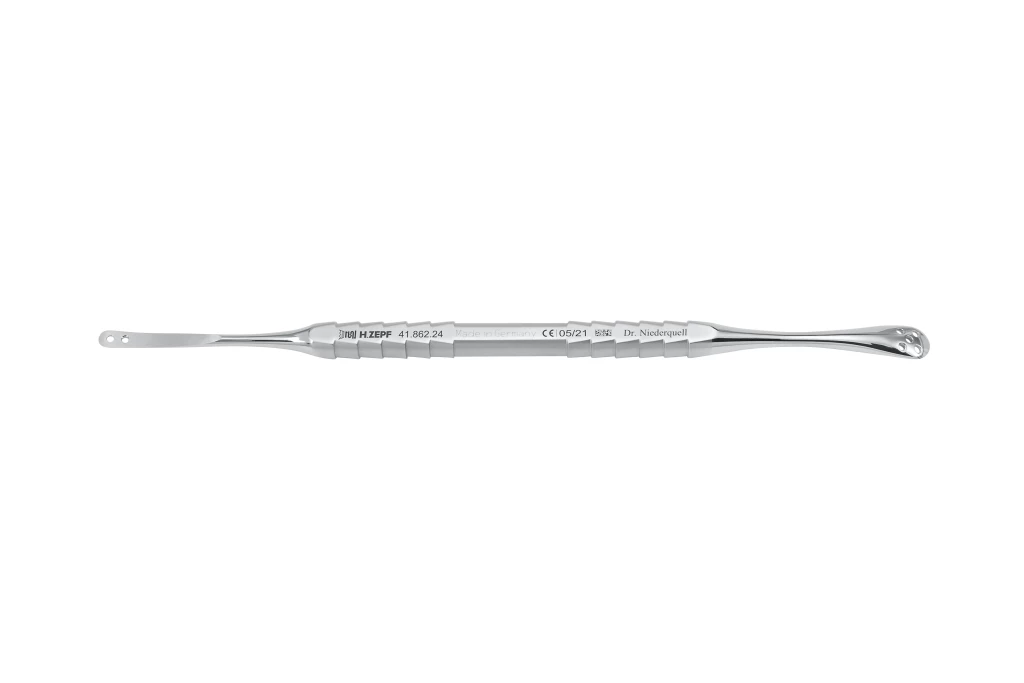
Перфорированный периостальный подъемник
ОтHelmut Zepf
Код 4186224
Нет в наличии
В данный момент интересующего вас товара нет в наличии. Перейдите в каталог, чтобы найти широкий ассортимент аналогичных товаров
Нет в наличии
В данный момент интересующего вас товара нет в наличии. Перейдите в каталог, чтобы найти широкий ассортимент аналогичных товаров
Описание
Для диссекции мукопериостеума и введения костного заменителя на место, в сочетании с одновременной аспирацией избыточных жидкостей во времяaugmentation, согласно д-ру Нейдерквеллу, DBGM.
Perforated periosteal elevators are essential tools in the field of dentistry, particularly in oral and maxillofacial surgery. These instruments are designed to facilitate the elevation of the periosteum from the underlying bone, allowing for better access during surgical procedures. Below are some common characteristics of perforated periosteal elevators:
Design Features
- Perforated Blade: The most distinguishing feature of a perforated periosteal elevator is its perforated blade. These holes allow for better grip and traction on the periosteum, minimizing the risk of tearing.
- Curved or Straight Shape: Perforated periosteal elevators come in various shapes, including curved and straight designs. The curvature aids in accessing different anatomical areas, while straight elevators provide a more direct approach.
- Handle Design: The handle of a perforated periosteal elevator is typically ergonomically designed for a comfortable grip, allowing for precise control during surgical procedures.
Material Composition
- Stainless Steel: Most perforated periosteal elevators are made from high-quality stainless steel, ensuring durability and resistance to corrosion.
- Autoclavable: These instruments are designed to withstand sterilization processes, making them safe for repeated use in clinical settings.
Functionality
- Effective Elevation: The perforated design enhances the instrument's ability to separate the periosteum from the bone effectively, which is crucial for procedures such as tooth extractions and implant placements.
- Versatility: Perforated periosteal elevators can be used in various surgical procedures, including periodontal surgeries, bone grafting, and flap surgeries.
Size Variations
- Different Sizes: These elevators come in various sizes to accommodate different surgical needs and patient anatomies.
- Specialized Tips: Some perforated periosteal elevators feature specialized tips designed for specific procedures, enhancing their functionality.
Maintenance and Care
- Cleaning: Proper cleaning after each use is essential to maintain the integrity of the instrument and prevent contamination.
- Inspection: Regular inspection for wear and tear is crucial to ensure the instrument remains effective and safe for use.
The perforated periosteal elevator is an essential instrument in the field of dentistry, particularly in oral and maxillofacial surgery. Its unique design and functionality make it invaluable for various clinical procedures. Below are the primary indications for the use of a perforated periosteal elevator in dentistry.
1. Elevation of the Periosteum
The primary indication for using a perforated periosteal elevator is to elevate the periosteum from the underlying bone. This is crucial during surgical procedures such as:
- Tooth Extractions: Facilitating access to the tooth roots by lifting the periosteum away from the alveolar bone.
- Bone Grafting: Preparing the site for grafting by ensuring the periosteum is adequately elevated to allow for proper healing.
2. Access to Bone Structures
In procedures requiring access to the bone, the perforated design of the elevator allows for:
- Improved Visibility: The perforations help in visualizing the underlying structures, which is essential for accurate surgical intervention.
- Minimized Trauma: The instrument allows for a gentle lift of the periosteum, reducing the risk of tearing and trauma to the surrounding tissues.
3. Facilitating Flap Reflection
During surgical flap procedures, the perforated periosteal elevator is used to:
- Reflect Flaps: It aids in the reflection of mucoperiosteal flaps, which is essential for access to the surgical site.
- Maintain Flap Integrity: The perforated design helps in maintaining the integrity of the flap while allowing for adequate blood supply.
4. Enhancing Surgical Precision
The use of a perforated periosteal elevator enhances surgical precision by:
- Controlled Elevation: The instrument allows for controlled elevation of the periosteum, which is crucial in delicate procedures.
- Reducing Bleeding: By minimizing trauma to the periosteum and surrounding tissues, it helps in reducing intraoperative bleeding.
5. Assisting in Implant Placement
In dental implantology, the perforated periosteal elevator is indicated for:
- Site Preparation: Elevating the periosteum to prepare the site for implant placement.
- Ensuring Stability: Proper elevation ensures that the implant has a stable base for osseointegration.
6. Use in Periodontal Surgery
In periodontal procedures, the perforated periosteal elevator is beneficial for:
- Accessing Periodontal Tissues: Elevating the periosteum to gain access to the underlying periodontal tissues for treatment.
- Facilitating Regenerative Procedures: Assisting in procedures aimed at regenerating lost periodontal structures.
7. Aiding in Sinus Lift Procedures
During sinus lift surgeries, the perforated periosteal elevator is used to:
- Elevate the Sinus Membrane: Carefully lifting the sinus membrane to create space for bone grafting.
- Minimize Complications: Its design helps in reducing the risk of perforation of the sinus membrane during elevation.
In summary, the perforated periosteal elevator is a versatile tool in dentistry, particularly useful in surgical procedures involving the elevation of the periosteum, access to bone structures, flap reflection, and enhancing surgical precision. Its unique design not only aids in various surgical techniques but also contributes to improved patient outcomes.
In the realm of dental surgery, precision and efficiency are paramount. One tool that has gained significant attention for its effectiveness is the perforated periosteal elevator. This specialized instrument offers numerous advantages that can enhance surgical outcomes and improve patient experiences.
Enhanced Visibility
The perforated design of the periosteal elevator allows for better visibility during surgical procedures. The holes in the instrument facilitate the removal of soft tissue while minimizing trauma to surrounding structures. This enhanced visibility is crucial for dentists to accurately assess the surgical site and make informed decisions.
Improved Tissue Management
Using a perforated periosteal elevator aids in the careful lifting of the periosteum from the underlying bone. This is particularly beneficial in procedures such as tooth extractions and implant placements, where preserving the integrity of the surrounding tissues is essential. The perforations help in reducing the risk of tearing, leading to better healing outcomes.
Reduced Trauma to Surrounding Tissues
- Minimized Damage: The design allows for a more controlled and gentle approach, reducing the likelihood of unnecessary trauma to adjacent tissues.
- Less Bleeding: By minimizing tissue damage, the use of a perforated periosteal elevator can lead to less bleeding during surgical procedures.
Versatility in Applications
The perforated periosteal elevator is not limited to a single type of procedure. Its versatility makes it suitable for various dental applications, including:
- Tooth extractions
- Bone grafting procedures
- Implant placements
- Periodontal surgeries
Facilitating Bone Grafting
In bone grafting procedures, the perforated design allows for better access to the bone while maintaining the integrity of the surrounding soft tissues. This is crucial for successful graft integration and overall surgical success.
Ergonomic Design
Many perforated periosteal elevators are designed with ergonomics in mind. This ensures that dental professionals can use the instrument comfortably for extended periods, reducing hand fatigue and improving precision during intricate procedures.
Enhanced Control
The grip and balance of a perforated periosteal elevator provide dentists with enhanced control over their movements. This is particularly important in delicate surgeries where precision is key to achieving optimal results.
Improved Patient Outcomes
Ultimately, the use of a perforated periosteal elevator contributes to improved patient outcomes. By minimizing trauma, enhancing visibility, and facilitating better tissue management, dental professionals can ensure a smoother recovery process for their patients.
Incorporating a perforated periosteal elevator into dental practice not only streamlines surgical procedures but also elevates the standard of care provided to patients. As dental technology continues to advance, tools like the perforated periosteal elevator will remain essential in achieving successful surgical outcomes.
Нет в наличии
В данный момент интересующего вас товара нет в наличии. Перейдите в каталог, чтобы найти широкий ассортимент аналогичных товаров