

Implantology Congress. XXIV. Dental World – International Dental Exhibition and Congress
/education-service/media/default/81762/6c31a3d5.jpg)
Stavros Pelekanos
Детали курса
Лекторы
Место проведения
Программа
🌟FREE participation in the event for owners of Premium +48 and Premium +36 club access.
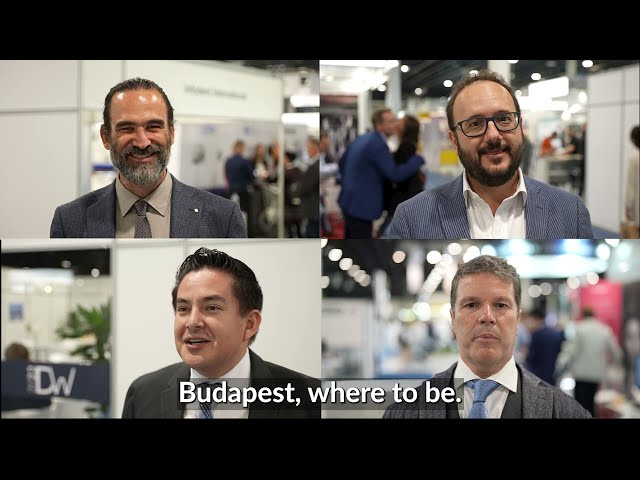
For more than two decades now, the leading players in dentistry have been meeting in Budapest to gain knowledge, experience and expertise.
Congress participants and international experts from 50+ countries from all over the world, with a special focus on the Central-Eastern European countries, will be able to attend 5 international congresses. The presence of more than 300 dental manufacturers will guarantee first-hand experience of all the innovations that will be seen in dental practices in the years to come. In addition, live surgeries, demos, workshops and practical training sessions will provide visitors with knowledge that can be applied immediately, while the social event will help participants to get to know not only Budapest but also each other better.
Keynote speaker – Dr. Stavros Pelekanos.
IMPORTANT: You can also purchase:
– "All access" ticket (all the 5 congresses for 3 days long)
– "VIP" ticket (all the 5 congresses + three-day lunches, soft drinks and VIP parking)
PROGRAM
Thursday, October 10
9.20-9.30
Dr. Zsolt Németh, Dr. Levente Sidó
Opening
9.30-10.30
Dr. Maurizio Signorini
From the Concept of “Big Cut, Great Surgeon” to Minimally Invasive Surgery
This lecture will include a roundup of different experiences, with common fundamental basis, as cornerstones of a predictable surgical success, built on many easily avoidable errors. In which areas it has brought us experience and failures. What we consider basic for a simple and predictable surgery.
10.30-12.30
Prof. Andrea Mombelli
Biofilms on Implants – Problems and Solutions in Preventing and Treating Peri-Implantitis
Biofilms on dental implants present a significant clinical challenge as they can lead to peri-implantitis, a pathological condition characterized by inflammation and bone resorption around the implant. Biofilms are composed of complex microbial communities that adhere to implant surfaces and are encapsulated within an extracellular polymeric matrix. This matrix confers protection to the bacteria against antimicrobial agents and the host immune system, rendering infections persistent and refractory to conventional treatments. The implementation of stringent oral hygiene protocols for patients with dental implants is imperative. This includes regular professional cleaning and patient education on optimal home care procedures to mitigate biofilm formation. Mechanical debridement remains a cornerstone in managing peri-implantitis, employing specialized instruments such as ultrasonic scalers and air abrasive devices. Additionally, antimicrobial therapy may be administered to reduce the bacterial load.
In cases of advanced peri-implantitis, surgical intervention may be necessary to achieve complete removal of the biofilm and infected tissue, and to facilitate regenerative procedures aimed at restoring lost bone. Regular follow-up and maintenance are essential to ensure the long-term success of dental implants and to monitor for early signs of peri-implantitis.
11.30-12.30
Dr. Sándor Kovách
Zirconium Implant and Its Applications for Patients Recovered from Oral Cancer
Zirconium implants are increasingly being used across various fields of dentistry and medicine (such as orthopedic implants). This is due to the numerous advantageous properties that zirconium has compared to titanium implants commonly used in daily practice. Hence, it is often referred to as the implant system of the future. Perhaps the most outstanding of these advantages is the enhanced tissue regeneration.
The first part of the presentation discusses zirconium implants in general, as well as their everyday applications. The second part presents three case studies where zirconium implants were placed in patients who had previously undergone surgery for malignant tumors in the oral cavity and had received radiation therapy thereafter.
12.30-14.00
Lunch break
14.00-15.30
Dr. Cosmin Dima
Esthetics Around Implants – New Techniques
The health of the peri – implant tissues plays an important role in the long term outcome of dental implants. The absence of keratinized gingiva (KG) may be a risk factor for developing recession or periimplantitis. Among the various soft tissue augmentation techniques Apically repositioned flap, Free gingival grafts ( FGG ) and Connective tissue grafts ( CTG ) are documented as the most predictable methods to increase the width of KG. Autogenous grafts increase the soft tissue thickness and improve aesthetics compared to non-grafted sites. But all these techniques involve harvesting the graft opening another wound. The “Snake technique“, described by Dr. Dima Cosmin, is the only one technique having advantages of only one wound but in the same time offering the best results in time like the other well known techniques mentioned above.
How the technique should be used, the details that make surgical intervention a success, but also the possible complications and their solving, will be detailed during presentation. The second part of the presentation will be about difficult cases in the esthetic zone and how to transform a big challenge into success. Maybe the most important goal of the presentation is that the participants will learn how to end with beautiful and safe results, even when we deal with very difficult cases.
15.30-17.00
Prof. Darko Bozic
What Can Be Achieved with Collagenous Matrix for Soft Tissue Enhancement Around Implants
Among the goals in periodontal plastic surgery of the key ones around implants is to change the phenotype of the soft tissue. Based on the current literature the connective tissue graft is still considered as a gold standard for soft tissue enhancement around implants. Since autogenous soft tissue harvesting requires an additional surgical procedure, this makes it more traumatic and painful for the patients. To reduce patients' morbidity over the last decade xenogenous collagen matrices have been introduced as replacement grafts to autogenous ones. However these materials have limitations and there is also a learning curve when utilizing them. This lecture will cover various collagenous matrices for soft tissue reconstruction and will show clinical results when using these materials and comparisons to autogenous grafts. Furthermore, their limitations and proper indications will be shown in order to understand what could be the right approach when using these materials.
Friday, October 11
9.20-9.30
Dr. Zsolt Németh, Dr. Levente Sidó
Opening
9.30-11.00
Dr. Stavros Pelekanos
Indications and Limitations for Immediate, Early and Delayed Implant Placement in the Esthetic Zone – Defining the Rationale
Implant placement in the esthetic zone remains always a challenging clinical procedure requiring clinical skills and meticulous planning. “Maintain or recreate the volume” has always been a dilemma for the clinician the last decades affecting the treatment choice and often the clinical outcome. Immediate implants seem to gain again more trust since better hardware and software are being used. The purpose of this presentation is to provide simple clinical concepts to ensure stable transmucosal contours with high white and pink esthetic scores regardless of implant placement timing. Starting with the proper implant macro-geometry and guided implant placement, understanding the importance of the abutment design and the different zones of the transmucosal contour, the participants will be able to master step by step simple clinical procedures to achieve better long-term esthetic outcomes.
Learning Objectives:
- defining the rationale of immediate implant placement-what are the limits?
- when and how to use early and delayed implant concepts
- the different zones of the implant transmucosal contour and how the change through the healing phase
- the importance of different treatment-steps sequencing in late implant placement for long term esthetic results.
11.00-12.30
Dr. Joseph Choukroun
Osteo-immunology: A New Paradigm Shift in Implantology and Bone Grafting
Osteoimmunology is the modern science that shows the influence of the immune system on bone metabolism but also on all tissue healing phenomena. Indeed, bone healing starts with an immune reaction: inflammation triggered by the release of inflammatory cytokines. These cytokines are responsible for angiogenesis, which activates the formation of bone callus.
The behavior of bone cells is dependent on the functioning of the immune system which depends on the oxidants level. High level production of oxidants is named oxidative stress, will lead to a failure of the immune system with collateral effects such as infection, bone resorption by stopping remodeling, or fibro-integration. This is the case, for example, in diabetics, smokers, patients allergic to penicillin or in chronic inflammatory diseases.
A favorable bone metabolism will necessarily require a reduction of oxidative stress by means of various solutions such as adequate vitamin D supplementation, reduction of LDL cholesterol levels or other adequate immune stimulants. Antibiotic prophylaxis must also be revisited in order to use antibiotics with significant immune-stimulating properties. PRF has also an immune function : decreases the inflammatory level and increases the local anti-oxidants. It will be easy to demonstrate that peri-implantitis is an immune disease that causes bone loss around the implant, triggered by oxidative bone stress.
12.30-14.00
Lunch break
14.00-15.00
Dr. Pedro Moura
All on X Extreme
In this presentation, we will discuss extreme all-on x techniques. Specifically, we will be discussing the palatal approach, pterygoids, transinus, transnasal, hybrid, quad zygomas, and patient-specific implants.
15.00-16.00
Dr. Nicolas Haßfurther
The Art of Autologous Bone Regeneration: Step by Step to Success with PTFE Membranes
This presentation will delve into the capabilities of PTFE membranes for autologous bone regeneration and provide a practical guide for handling both simple and complex clinical cases.
This presentation offers a comprehensive overview of autologous bone regeneration using PTFE membranes, supported by current research findings, clinical experiences, and practical guidance, to enable participants to optimize their treatment methods and enhance patient care.
Additionally, the presentation will feature numerous surgical videos to illustrate key techniques and approaches in real-world scenarios. These videos will enhance understanding by showing the step-by-step application of PTFE membranes in various clinical settings, such as vertical bone augmentation.
A key focus of the presentation will be the management of membrane complications. Participants will learn about common pitfalls to avoid and how to effectively manage them to maximize the success rates of their procedures. From the correct placement of the membrane to its securing and maintenance, practical tips and case studies will be presented to demonstrate how critical errors can be avoided.
16.00-17.00
Dr. Costantino Vignato
Clinical Benefits of an Intramucosal Implant with a Convergent Neck for Improved Soft and Hard Tissue Maintenance
Implant selection may influence overall clinical success, especially when immediate loading is planned. As implants under function have the predominance of load in the crestal portion of the ridge, that bone thickness plays a significant factor in maintenance of that aspect of the bone-implant-contact (BIC). Stability of the hard and soft tissues crestally around the implant is critical to long-term maintenance of the implant. The implants design plays a significant factor in that. A special implant with a concave neck design provided with microgrooves allows thicker crestal bone and soft tissue that improves maintenance of those surrounding tissues while minimizing peri-implantitis potential. Different length of the neck allows the practitioner to place the implant at varying depths depending on the clinical anatomic situation that presents. The article reviews the benefits of an implant that in one body design own a screw, to bone integration, and a neck, to tissue integration, and its clinical implications.
Saturday, October 12
9.20-9.30
Dr. Zsolt Németh, Dr. Levente Sidó
Opening
9.30-10.30
Dr. Tome Tasevski
5 Steps to Success
Comprehensive & Practical Implantology, all-in-one... Infection control, Dental Implants, Bond Cements, Protective wound dressing, Maintenance...
10.30-11.30
Dr. Ioannis Vergoullis
The Implant Supra-Crestal Complex – Surgical & Prosthetic Considerations and Planning for Long Term Stable Results in Modern Implantology
This lecture will analyze the significance of biologic and prosthetic principles for proper implant 3-dimensional position, soft tissue management and prosthesis design for long term stable results and prevention of iatrogenically induced peri-implantitis.
11.30-12.30
Dr. Roland Glauser
Zero Peri-Implantitis – A New Concept in Implant Dentistry
Implantology
General questions
Implantation
Лекторы 1
/education-service/media/default/81762/6c31a3d5.jpg)
Assistant Professor in the Department of Prosthodontics, Dental School, University of Athens, Greece (appointed Lecturer in 2002, promoted to Assistant Professor in 2012). Specialist in prosthodontics, implant dentistry, and aesthetic dentistry. Maintains private practice in Athens focused on complex aesthetic and functional rehabilitation cases.
Over 30 years of clinical experience in fixed prosthodontics, implant-supported restorations, full-arch rehabilitations, and aesthetic smile design. Expert in digital workflows for prosthetic planning, customized abutment selection, and integration of soft tissue management with implant therapy. Known for evidence-based approaches to achieving predictable outcomes in the aesthetic zone.
Active Member of the European Academy of Esthetic Dentistry (EAED) since 2013. Member of the International College of Prosthodontists (ICP), European Prosthodontic Association (EPA), and Greek Prosthodontic Association. Faculty member at gIDE Institute (Global Institute of Dental Education), Los Angeles, California. Recipient of Second Prize (2008, Madrid) and First Prize (2011, Istanbul) at the scientific award competitions of the European Academy of Esthetic Dentistry. Author of over 20 peer-reviewed articles in international journals and two book chapters on prosthodontics and aesthetic dentistry. International lecturer presenting regularly in Europe, Middle East, and Asia on implant prosthodontics and full-arch rehabilitation protocols.
DDS from University of Athens, Greece (1991). Dr. med. dent. (doctoral degree in Prosthodontics) from University of Freiburg, Germany, under Professor J.R. Strub (1993).
Место проведения
/education-service/media/default/59663/0592f5c8.jpg "Venue location")
Hungexpo Fair Center
Albertirsai út 10, 1101, Budapest, Hungary
Организатор

Event Organizer Hungary Kft
Мало оценок